In the mid-1970s a gifted couple were putting together a series of Bible studies to help equip church leaders across Africa. Fred and Grace Holland* found themselves mulling over the program’s course on Prayer. “What name can work that best identifies the heart of this practice?”, the couple wondered.
The textbook, Talking with God – a modest-sized publication bearing an attractive green-tint cover design – still enjoys wide usage across the continent.
If prevailing prayer reflects the life rhythms of a maturing Christian, anyone who engages the discipline finds themselves in admirable company. From Abraham to Daniel and from Hannah, the mother of Samuel, to Hannah the widow in the temple where little Jesus was dedicated.
This practice (talking with God) has, through history, helped form his people into a different kind of humanity. Christ’s apprentices have grown to exhibit his core nature.
“Talking with” God implies something beyond a mere one-way conversation. In listening attentively to God’s voice – spoken through the revealed word (holy scripture) and through impressions and promptings brought forward from his own indwelling presence – the believer grows receptive to Christ’s particular “way of being”. Like a caterpillar-turned-butterfly, change is underway from the inside out.
As one’s own heart then finds voice (silently or verbally) – offering up thanksgivings, petitions, groanings – or bursts of joyful praise. A longed-for resemblance to God’s son takes form. Apprentices of Jesus, habituating themselves in their talking-with-God discipline, take on over time, just a little bit more of the likeness of their Lord. His graces: Goodness. Patience. Meekness. Lovingkindness. . .
As the writer of Celebration of Discipline put it, “The primary purpose of prayer is to bring us into such a life of communion with the Father that, by the power of the Spirit, we are increasingly conformed to the image of the Son.”*
The three words share common ground with yet another ‘C’ word – a special kind of word capturing what the others might reflect. Community. And, the very creator offering a believer his companioning presence – what a treasure!
“Faith was never meant to be done alone”.
Whoever coined the line understood, and must have surely prized, its profound truth. It reflects the human order when at its best.
The wonder of collaborating with God as a principal partner in life transformation means discovering that he brims with community within himself.
God’s three-in-one Community – boundless in love, delight and power – defies our capacities to imagine or describe. The nature of the divine trinity – God the Father, the Son and the Spirit – intrigues and stupefies the finite mind.
The old Puritans of centuries past coined a pithy term that calls up the warmth of their image of God. A glorious personal being of extravagant love, joy, goodness and peace. God (the Puritans testify) is, in himself, “a sweet Society”.
May we dare to imagine our sweet-society God, radically partnering with his children in the forever enterprise of shaping us, day by day, into the likeness and nature of Jesus. He, who is all goodness, through and through.
Is the particular condition (common to all humans) that we call desire, a good thing or a bad thing? We might go with a, “Well, it depends. . .”
We haven’t needed to experience much time on the planet to be able to confess – most of us with plenty of regret – that we have made some stinky messes along the way. By casually or carelessly giving in to desire (feelings). As John Piper puts it, “We should not be surprised or thrown off balance when we meet in ourselves, some really excessive and distorted bodily desires.”*
Piper went on to reference several disordered behaviors. . . gluttony, fornication, homosexual practices. To that list we can readily add gossip, lying, contemptuous speech (think political rhetoric either side of the aisle). The parade of missteps is longer than we would like to think. Help!
The good news is that help does come, to those earnestly looking for it. Seek and you will find, promises the Carpenter-turned-Rabi.
Part of the good news is that not all desires are bad. Indeed, most all the enslaving appetites that pollute and wreck human lives are actually “hijacked”, then distorted, versions of the real thing. Our best selves as humans bearing the marvelous image of God is what we are actually to grow into.
I really like food.
Foods and beverages come to us in all their wondrous forms and flavors. I indulge them largely out of a stirred-up appetite. Nasal sensors catch an aroma. Taste buds come alive to the mere thought of a delicacy. The stomach might be heard to growl. Maybe your own salivary glands are bearing witness to the phenomenon now! Into this scene at an inconvenient juncture, someone then inserts a useful, though uncomfortable question,
“Do we eat to live, or do we live to eat?”
Certainly, the lovely assortment of our most fundamental desires has made its way to our interior selves due to a very good design at the hand of a very good God. The measure that we are attentive and “lean into” our maker’s wisdom – drawing on his goodness, power and favor – may determine for us the difference between having a good, or a not-so-good (even tragic) pilgrimage here.
Sprinting through the front door I blurted the report. My mom’s face conveyed both alarm and puzzlement.
Tim? Fighting?
My brother survived the fracas. But the image itself seemed crazy. A Samurai Wrestler in a delicate ballet twirl would be more probable. Today’s incident was a thuggish brute who happened to spot a random kid – who happened to be my brother. And pouncing.
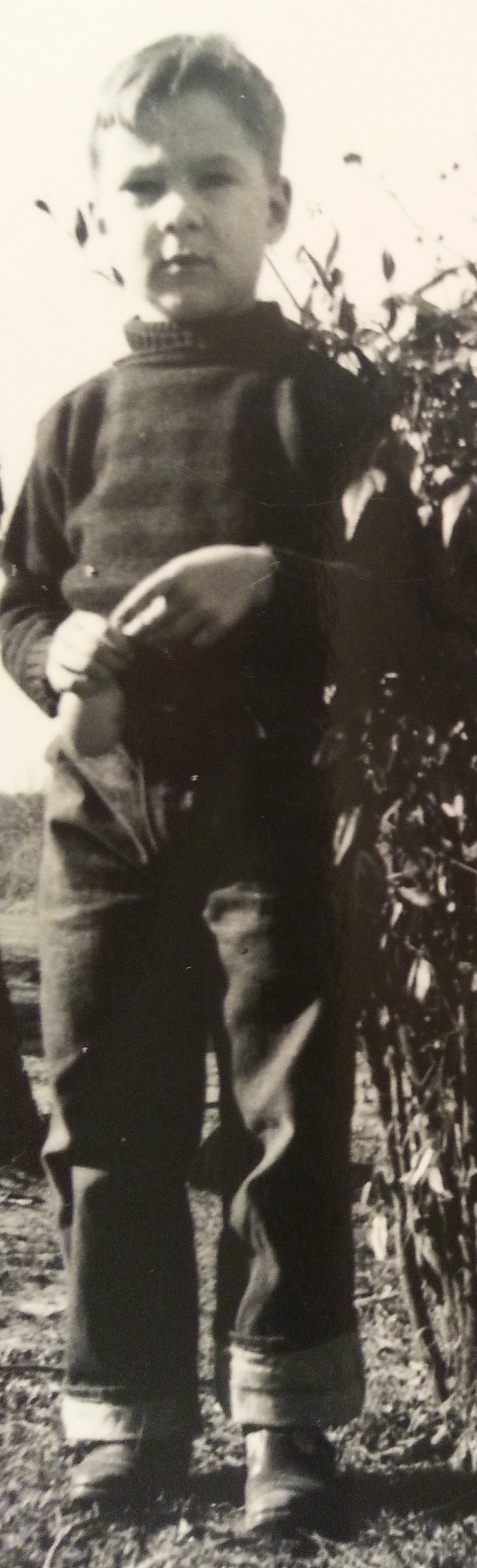
Actually Tim did fight. Not in this way. He fought throughout most his lifetime, and with valor.
Tim’s actual fighting was about goodness. Indeed, Tim fought to be a good person. To those near him, though, his struggle toward goodness appeared to be hardly a struggle at all. He breathed goodness. So it often seemed. For me, his kid brother who more typically breathed mischief, this was disconcerting. Once our dad suspected us of cigarette smoking and approached me about it.
Do you boys sometimes smoke?
Mm, well, I think Tim might. Mischief.
But I idolized my big brother. We were little when I overheard mother say to a friend, Tim doesn’t eat tomotos. . . He also dislikes coconut and, Oh yes, pineapple. This was intel enough for me. If Tim shuns these things there is good reason for it. Mom could mark them off her grocery list.
I did acquire a taste for all three foods later in life. Once I sampled them.
To whatever measure they may have troubled him, Tim went to war against impoliteness. Rudeness and discourtesy. Years after our childhood days I heard him say to his Bible class, A practice in our home is to reserve the phrase ‘Shut up’, for only addressing the dog.
I admired him. I envied him. And I was ticked with him. Why did my brother need to be so stinking pleasant? And compliant?
Detecting goodness in him was fairly easy. Not stuffiness, though. He wasn’t Goody-two-shoes but was loads of fun. With a year and a month and a day separating our ages we did a lot together.
One of the things we did, we climbed things.
We climbed trees. Pear trees, Pecan trees, Willow trees. I watched Tim fall from one.
He fractured a wrist and his reconfigured forearm held me hypnotized the whole way to the hospital. Though clearly hurting, he handled the ordeal well. In the 1950s a bone fracture was a big deal. To set his arm the nurse put him under with ether-soaked cotton. It set in motion a bout of serious vomiting. He was miserable and didn’t make a fuss. No whining. Not a complaint really. I was impressed. Wow.
In our teen years Dad introduced useful outlets for our climbing zeal. He referred us to the steering wheel of a farm tractor. We climbed aboard. And many times thereafter.
Hay season found Tim steering the big red Farmall. He towed a mowing piece to the meadows. Once cut, the grass lay under the July sun to cure. My squatty orange Allis Chalmers required bailing wire to keep the shift controls in second gear. A multi-pronged hay rake followed behind the Allis. Once I raked the long grass into windrows, Dad wrapped up the process. He drew the grassy aroma into his lungs. Then guided his equipment to finish the baling operation for that meadow. Winter feed for his small cattle herd.
Tim and I kept climbing. Livestock chutes at the rodeo grounds across from our farm. Perched above the bull pens, we adjusted our straw hats and rested our chins on the heels of our open hands. Like the ranch-men did at the animal auctions. What fun – up here with my big brother. Adjusting our position, we surveyed the grown-up wranglers practicing their calf-roping.
We didn’t tire of climbing. The two of us climbed onto the back of Old Bill. Riding horseback meant free entrance to our annual Rodeo events – even if riding double.
The most thrilling climbing was to the top of Greenwood Lake’s High Platform. Well above the water surface the platform reigned. It overlooked the diving boards further down. Greenwood – beloved pond-turned-swimming hole at the edge of town. And the platform. Stationed behind my brother I looked down and shivered. Tim was standard-bearer. If Tim was gutsy enough to fling himself out over the waters from way up there, well. . .
My brother Tim and my sister, Betty – each influenced me toward good. They conveyed wisdom. Unconsciously at times. Each brought significant insights my way at some crucial times. One of the harshest – and most helpful – statements I took in as a kid came at me through clenched teeth. Tim’s.
During an especially obnoxious stage of my teenage years Tim shocked me to sanity. Or at least to consider it. Annoyed again by my asinine antics he abruptly turned my way. He had it with me this time. His voice levelled.
You know, Jerry, you’re a punk. That’s what you are. Nothing but a punk!
His words seared. Like a hay hook going in. Tim had rebuked me with good cause at other times. But this is the time I remember. Following the correction I assessed, as well as I might, the words, nothing but a Punk. I resolved to work hard. At changing. First, I realized punk-behavior mode when I saw it. Until that rebuke, I hadn’t seen it – really seen it – in myself. Years later I reminded him of the strong medicine he dispensed that day. Tim didn’t seem to recall it. We laughed.
Faithful are the wounds of a friend*
He was the best of brothers, the best of friends.
*Proverbs 27
Timothy Arthur Lout August 28, 1944 – July 6, 2010
The mourners dispersed. The flower-dotted cemetery reverted to its earlier stillness. Thelma almost whispered her words.
What is it, Dovie? This Presence. It’s inside me. . in gentle waves. What is this goodness and this . .safety I feel?
Thelma’s question hung in the air. The shadow of a Canary Island Palm stretched across the lawn before them.
She was hungry for answers. This utter absence of her earlier grief astonished her. She hoped that the extraordinary calm would somehow remain. Yet she feared it may take flight. Could she carry on?
Dovie, will this peace, or the source of it, be near again if I (she corrected herself) when I need it?
More questions. She had many and voiced most of them to Dovie over coming weeks.
Dovie was not a person of complicated notions or grand explanations. She waited. As she sensed a thought forming that brought clarity she pondered it, then offered a response. Otherwise she remained still. Prayerful.
The God that Dovie came to know and to love was real. And he was the giver of the Book. She knew that answers for questions that actually mattered were linked to the precious book. The pages of her own Bible showed uncommon signs of wear. It attested to truth. And to God’s presence.
“All I know, Thelma, is Jesus is real. It’s him. He’s the presence.” Her words were simple, uncomplicated. Dovie responded in this way it seemed every time. Always highlighting Jesus.
How do I get him. . have him in my life, Dovie? Can I? I don’t want to be without the hope. I need Jesus.
“Just say that to him, dear. Give him your heart. Surrender to him your whole life. Let him begin to take over. He’s listening. He doesn’t turn anybody away.”
Thelma yielded. As much as she knew how to. Shortly afterward Clyde kneeled, giving himself over to God’s care. Both of them were ready. They sensed it keenly. They needed God’s presence.
They were comforted too, that he understood the pain of releasing a son to the grave. Neither understood a lot of their salvation. They didn’t worry themselves over it. They just believed, and trusted.
Clyde and Thelma entered a new kind of life. Striding forward in faith, limping at times. In love. And hope.